 Lakeland Mobile Home Leveling
 Tie-Downs & Anchors for Mobile Homes in Lakeland
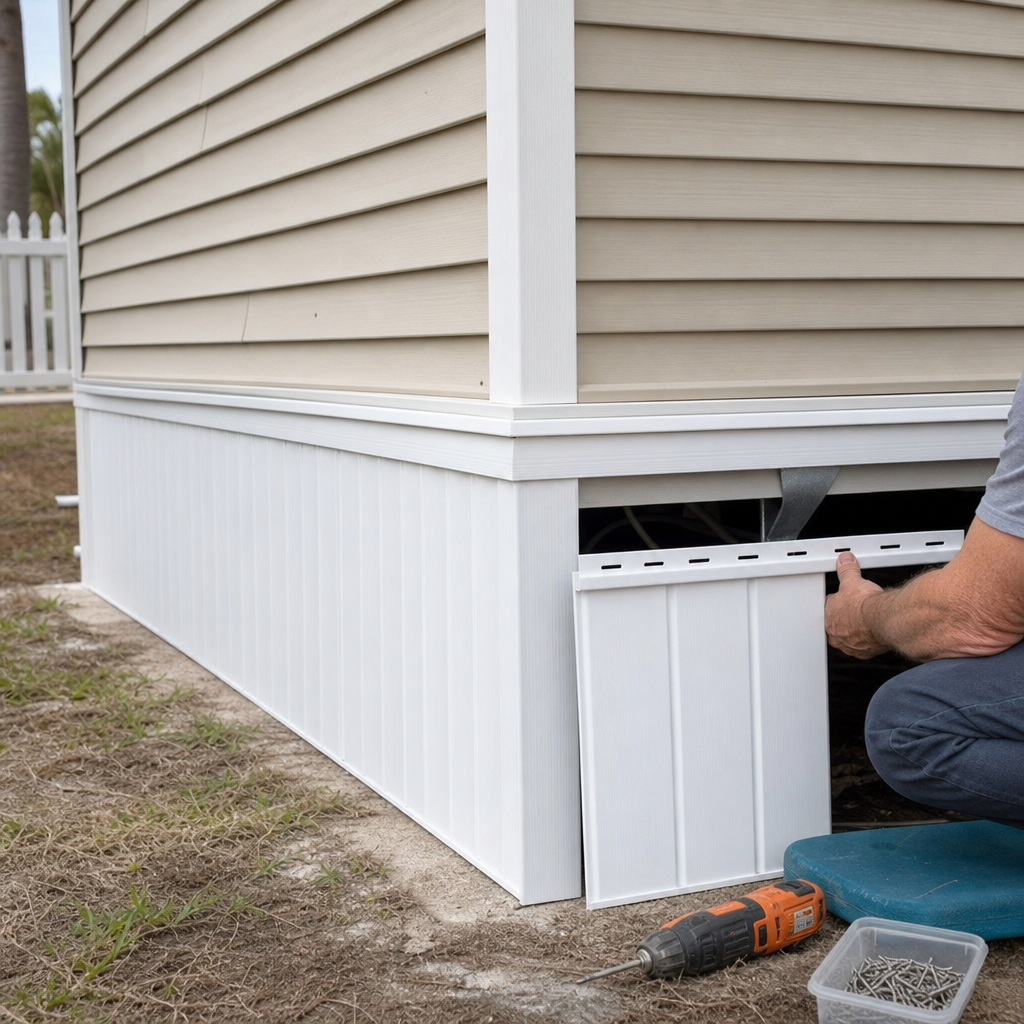
Tie-downs are the ground anchors and steel straps that hold your mobile home to the earth in a windstorm, and in Central Florida they are not optional hardware. We inspect, re-tension, replace, and install anchor systems for Lakeland owners to Florida Rule 15C-1 standards; Florida requires a state installer licence for this, so ask for the number. Re-tensioning should be bundled with every relevel; a full retrofit or new install runs $600–$3,500 depending on anchor count. The under-home inspection that tells you where your system stands is free.
Polk County took a hurricane across its middle in October 2024. This is the page most worth reading before the next one, not after.
What a tie-down system actually is
Three components, each of which can fail independently:
- Ground anchors: galvanized steel augers screwed 3–4 feet into the soil, rated for the load and the soil type. Florida standards require hot-dipped galvanized augers installed to the manufacturer’s spec in undisturbed or compacted soil, an anchor spun into loose fill holds a fraction of its rating.
- Straps: galvanized steel strapping running from the anchors to the home’s frame (frame ties), and on many homes over the roof structure or to the sidewalls for uplift protection.
- Tension hardware: the buckles and bolts that hold the straps tight. Straps only work under tension; a slack strap is decorative.
A properly installed system on a typical Polk County home involves 12–20+ anchors, spaced and rated per Rule 15C-1 for the home’s size and wind zone. Coastal wind zones require more anchors, tighter spacing, and higher-rated straps; inland Polk’s requirements are lower but strict, and enforced through county permitting.
Why Lakeland systems quietly stop working
Settling is the big one. Straps are tensioned to the home’s height on install day. When piers settle, and on Polk County sand they settle a little every year, the frame drops and the straps go slack. The system looks intact from outside the skirting and delivers little of its rated protection. This is why strap re-tension should be part of every relevel: the two problems are the same problem.
Corrosion is the slow one. Florida humidity, ground moisture under the home, and decades of time eat galvanizing. Rusted straps lose section; corroded anchor heads snap under load. Under older homes around Combee Settlement, Highland City, and the US-92 parks, straps you can flake with a thumbnail are common.
Age of installation is the structural one. After Hurricane Andrew, HUD toughened its wind standards in 1994, and Florida’s installation rules tightened with them. A large share of Polk County’s park stock predates that line, pre-1994 homes were commonly installed with fewer anchors and lighter strapping than today’s rules require, and pre-1976 (pre-HUD-code) homes are a further step down. If your home is from that era and has never had an anchor retrofit, assume the system underperforms until an inspection says otherwise.
Milton stressed everything. Hurricane Milton crossed Polk County at hurricane strength with a 1-in-1,000-year rainfall, over 12 inches on Lakeland in 24 hours. Saturated sand grips anchors poorly, homes settled, and straps loaded and slackened in the same week. A post-Milton strap check is one of the most common requests here, and it’s free.
What the inspection covers
Under the skirting with a flashlight and a tension gauge, we document: anchor count against Rule 15C-1 requirements for your home, anchor condition and grip, strap condition (corrosion, kinks, cut edges), tension on every strap, and how the system ties into the frame, plus the pier and vapor barrier condition while we’re under there, because you should only have to open the skirting once. You get a straight report: what passes, what’s marginal, what’s missing, and a flat price for each tier of fix.
What it costs
| Work | Range |
|---|---|
| Strap re-tension (with a relevel) | usually included |
| Individual anchor or strap replacement | quoted per anchor |
| Full retrofit / new install | $600–$3,500 |
Anchor count drives the total, a short singlewide needing 12 frame ties is the bottom of the range; a long doublewide needing a full system with sidewall protection is the top. Details on what moves the number are on the pricing page. Permits: anchor work in Polk County typically requires a county permit and inspection under §320.8325 F.S., which the installer handles end to end.
Sale, insurance, and park requirements
Tie-downs aren’t just storm protection. They’re paperwork. Park managers across Lakeland routinely require proof of a compliant anchor system before approving a home sale, insurers ask about tie-downs on manufactured home policies, and FHA/VA financing requires a foundation certification that includes the anchoring. If you’re selling, the pre-sale leveling inspection covers level, support, and tie-downs in one written report for $150–$350, usually credited toward any work found.
Timing, honestly
Demand for anchor work spikes twice: the first week of June when hurricane season opens, and the day after a named storm gets a cone anywhere near Tampa Bay. If you book in those windows, you’ll wait. Everyone calls at once. The smart move in Lakeland is to have the system inspected and brought to spec in the quiet months, ideally alongside a relevel so the strap tension is set against a level frame. October through May, scheduling is easy and the work is identical. That’s not a sales line; it’s just how the calendar works here.
A licence is required
Anchor and tie-down work on an installed home is state-licensed installer work under §320.8249, Florida Statutes, performed to Rule 15C-1. Ask for the licence number of whoever sets your anchors, us included, before the first one goes in; on this service in particular, that matters, because a badly set anchor looks identical to a good one until the wind arrives. We do tie-down work in Lakeland plus Winter Haven, Auburndale, Plant City, and Bartow. Questions about how tie-downs interact with leveling are in the FAQ, or book the free inspection and get answers specific to your home.
Frequently Asked Questions
How much do mobile home tie-downs cost in Lakeland?
A full anchor install or retrofit runs $600–$3,500 depending on how many anchors your home and wind zone require. Most homes need 12–20 or more. Strap re-tensioning is usually bundled into a relevel at little or no added cost. Expect a flat quote after a free inspection of what's under the home now.
How many anchors does my home need?
It depends on the home's length, whether it's a singlewide or doublewide, and the wind zone requirements in Florida Rule 15C-1: most Polk County homes land in the 12–20+ range, with both frame ties and, on many homes, over-the-top or sidewall protection. The inspection counts what you have against what the rule requires.
My home was anchored when it was installed, why would it need work now?
Three reasons: settling leaves straps slack (the home dropped, the anchors didn't), galvanized straps and anchor heads corrode in Florida's humidity over decades, and older pre-1994 installs were done to weaker standards with fewer anchors. Any one of those means the system won't deliver its rated protection in a storm.
Can you just tighten my existing straps?
If the anchors and straps are sound, yes, re-tensioning is quick and it belongs in every relevel. But tensioning a corroded strap or a loose anchor gives false comfort, so we check anchor grip and strap condition first and tell you honestly which parts are worth keeping.
Do tie-down installs need a permit in Polk County?
Generally yes, anchor and tie-down work in Polk County typically requires a permit and inspection through the county Building Division, and the work must meet §320.8325 F.S. and Rule 15C-1 standards. The installer doing the work pulls the permit; you shouldn't have to handle any of it.
More mobilehome services
- Mobile Home Leveling in Lakeland, Florida
- Pier & Pad Repair for Mobile Homes in Lakeland
- Mobile Home Underbelly & Vapor Barrier Repair in Lakeland
- Mobile Home Skirting Repair in Lakeland
- Pre-Sale Leveling Inspection for Lakeland Mobile Homes
- Mobile Home Roof-Over and Roof Coating in Lakeland
- Mobile Home Subfloor and Floor Repair in Lakeland
- Mobile Home Carport & Screen Room Repair in Lakeland
Areas we serve
- Lakeland, FL
- Mobile Home Leveling and Tie-Downs in Lake Wales, Florida
- Mobile Home Leveling and Underbelly Repair in Polk City, Florida
- Mobile Home Leveling in Auburndale, Florida
- Mobile Home Leveling in Bartow, Florida
- Mobile Home Leveling in Plant City, Florida
- Mobile Home Leveling in Winter Haven, Florida
- Mobile Home Tie-Downs and Leveling in Mulberry, Florida